
What Is Spinal Decompression?
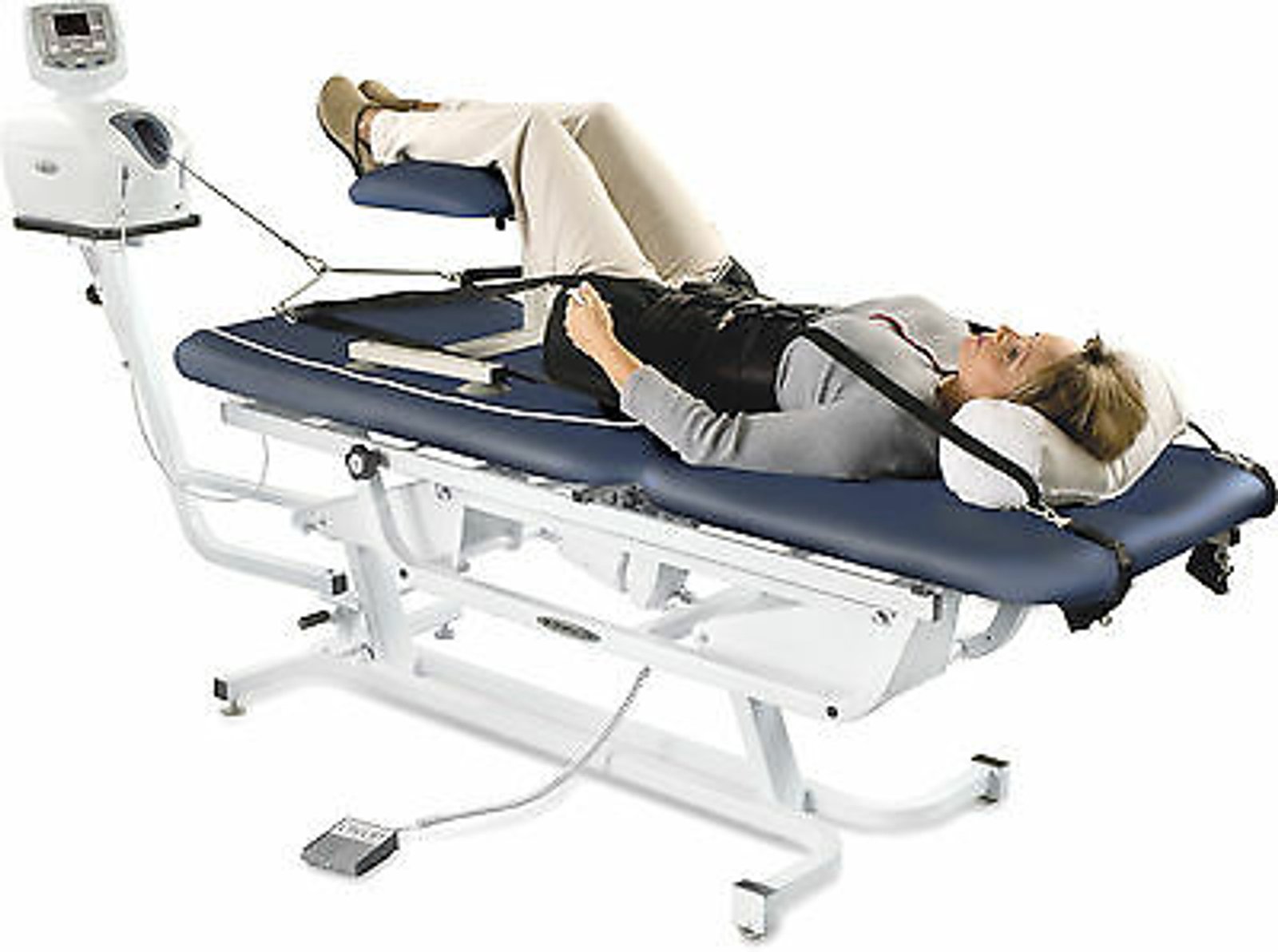
Spinal Decompression Therapy at DeMaio Family Chiropractic & Physical Therapy offers a gentle, non-surgical approach to relieving disc-related pain in the neck and lower back. Using advanced systems—including the D.O.C. (Dynamic Orthopedic Compression) table and the Chattanooga Triton DTS—we create controlled cycles of spinal stretching that help reduce pressure on irritated discs and nerves.
A limited number of DRX units are also available for specific cases where that traction style is ideal.This therapy is designed to support natural healing by improving disc hydration, increasing nutrient flow, and easing nerve irritation. Many patients seek decompression for conditions such as herniated or bulging discs, degenerative disc disease, sciatica, spinal stenosis, facet joint irritation, chronic neck or low-back pain, and nerve compression. Sessions are typically 20–30 minutes and may be paired with other therapies such as chiropractic care, Class IV laser therapy, and customized rehabilitation exercises.
Most patients describe the experience as relaxing, and many fall asleep during treatment. Candidacy depends on factors like the severity and age of the injury, imaging findings, and overall health.
If you’re unsure whether decompression may be right for you, our 11-Question Spine Health Quiz offers a quick, helpful starting point.
With personalized decompression options and convenient locations in Bowie and Gambrills, we are committed to helping patients move more comfortably, function better, and return to the activities they love.
Spinal Decompression Therapy at Our Bowie And Gambrills Clinics
Back pain, disc degeneration, nerve irritation, and radiating symptoms can slowly reshape the way you move, work, and live. For many patients, the most difficult part is the feeling of limitation — reduced mobility, fewer comfortable positions, disrupted sleep, and the constant sense that something inside the spine just isn’t functioning the way it used to. Spinal decompression therapy is designed to directly address these issues by easing pressure at the disc level, improving mobility, and creating an environment where irritated tissues can finally begin to recover.
At our Bowie and Gambrills clinics, spinal decompression is not a one-size-fits-all procedure. Instead, it’s a personalized, non-surgical therapy delivered through advanced systems including the D.O.C. (Dynamic Orthopedic Compression) table, the Chattanooga Triton DTS, and—in select cases—a limited number of DRX units. This range of equipment allows us to tailor decompression to each patient’s anatomy, comfort level, and diagnosis rather than forcing every condition into the same machine or program. The result is a more comfortable experience and a higher likelihood of meaningful improvement.
How Spinal Decompression Works
Spinal decompression gently stretches targeted sections of the spine to reduce intradiscal pressure. When discs are under constant load—whether due to injury, aging, posture, or repetitive strain—they can bulge, thin, or press against surrounding nerves. By creating intervals of negative pressure within the disc, decompression encourages increased hydration, allows space for oxygen and nutrient exchange, and helps retract or reduce disc bulges that are irritating nerves. Unlike simple mechanical traction, true decompression cycles between gentle stretching and relaxation phases, preventing muscular guarding and promoting better tissue response.
Most patients describe the experience as calming and comfortable. In fact, many fall asleep during their sessions. While decompression cannot reverse long-standing spondylosis or structural arthritis, it can significantly improve secondary symptoms by supporting disc hydration and reducing nerve compression.
Our Decompression Technology: Why It Matters
The technology behind decompression therapy directly affects comfort, precision, and results.
This is where our clinic stands apart:
The D.O.C. Table
Our primary system, the D.O.C. table, uses segmented traction and advanced angle control to specifically target the disc levels involved in your condition. It adapts to your body type and responds in real time to tension changes, making sessions both effective and comfortable.
The Chattanooga Triton DTS
The Triton DTS system offers smooth and highly controlled traction, ideal for individuals who benefit from a more traditional decompression approach. Its precision in lumbar and cervical angle adjustment makes it especially useful for complex multi-level disc issues.
Selective DRX Use
We maintain a limited number of DRX units for cases where this style of decompression is clinically preferred. DRX is not the center of our program, but it remains a valuable option for specific disc patterns that respond best to its traction mechanics.
By combining these systems, we ensure every patient receives the decompression style that matches their body—not the other way around.
Conditions Decompression Helps Address
Patients often come to us after trying medications, massage, injections, or physical therapy without lasting relief. Decompression is frequently used for:
- Lumbar or cervical disc bulges and herniations
- Degenerative disc disease and loss of disc height
- Sciatica and nerve-root irritation
- Spinal stenosis
- Facet joint compression
- Chronic neck or lower-back pain
- Scoliosis-related mechanical strain
- Persistent muscle spasms caused by disc or joint dysfunction
If you’re unsure whether your symptoms fit, our 11-Question Spine Health Quiz offers a fast, helpful screening.
What a Typical Session Looks Like
During your appointment, you’ll lie comfortably on the decompression table while the system applies carefully calibrated traction cycles. There is no pulling, jerking, or discomfort. Most sessions last 20–30 minutes, and depending on your needs, decompression may be paired with:
- Chiropractic adjustments to restore joint motion
- Class IV deep tissue laser therapy to reduce inflammation
- Shockwave or physiotherapy modalities for soft-tissue recovery
- Stabilization exercises to support long-term results
- Nutritional support for disc and connective-tissue health
Programs are customized based on the severity and age of the injury, your medical history, and how your body responds to the first few sessions.
Are You a Candidate?
Not everyone needs decompression—but many people who have been living with persistent disc-related symptoms benefit from it. During your consultation, Dr. John DeMaio will evaluate your history, examine your spine, review imaging (if available), and discuss your goals to determine whether decompression is appropriate.
If you want a simple starting point before scheduling, begin with our 11-Question Spine Health Quiz to see whether your symptoms align with common decompression candidates.
Frequently Asked Questions:
Whether you’re recovering from a recent injury or managing a long-standing condition, our goal at DeMaio Family Chiropractic & Physical Therapy is to help you move with ease, regain strength, and live life with greater freedom and comfort.
Schedule your consultation:
📍 Bowie Office – (301) 262-4545
📍 Gambrills Office – (410) 721-2222
Frequently Asked Questions About
Spinal Decompressio In Bowie, MD & Gambrills, MD
Most patients complete their initial care program over 6 to 8 weeks, with treatments typically scheduled several times per week. The exact length depends on your condition, overall health, and how your body responds to therapy. After an initial consultation, we’ll design a plan that’s tailored specifically to your needs and goals.
When properly administered, non-surgical spinal decompression is considered a low-risk therapy for many patients with disc-related issues. The DRX9000® system, or our D.O.C Tables continuously monitor your body’s resistance during each session, making real-time adjustments to ensure safety and comfort. As always, a full evaluation is essential to determine if you’re a good candidate for this type of care.
Most patients describe spinal decompression as a gentle, comfortable stretching sensation. Many even become so relaxed during the session that they drift off to sleep. The treatment is designed to be calming, not painful, and your comfort is closely monitored throughout every visit to ensure the settings are appropriate for your condition. Matter of fact, we’ve noticed a higher percentage of the patients simply fall asleep during the treatment.
Disc Restoration Therapy may be appropriate for a range of spinal disc conditions, including:
- Herniated or bulging discs
- Degenerative disc disease
- Sciatica
- Spinal stenosis
- Chronic neck or lower back pain related to disc dysfunction
We’ll review your full history and imaging, if available, to ensure the best possible approach to care.
How do I know if I’m a candidate for spinal decompression?
The best way to determine candidacy is through a consultation. Dr. DeMaio will perform a thorough evaluation, review any imaging you may have (such as X-rays or MRIs), and discuss your symptoms, health history, and goals. This helps us understand whether spinal decompression is the right fit for your specific condition.
You can get started by calling the location most convenient for you:
📍 Bowie Clinic – (301) 262-4545
📍 Gambrills Clinic – (410) 721-2222
Prefer online contact? Send us a message anytime, and a member of our team will follow up promptly.
Are You A Candidate For Spinal Decompression?
It’s quick and simple — Just answer 11 Yes-or-No questions.
Dr. DeMaio will personally review your responses to determine if you’re a candidate for spinal decompression. A member of our team will then contact you to discuss the next step.
Don’t forget to complete the contact form at the end so we know how to reach you.